



The Review
The Samsung Demo Phone currently tops our rank of the greatest Samsung phones available, beating even the pricier iPhone Ultra Max Mega.
So unsurprisingly this is an absolutely fantastic phone. The design isn't massively changed from the previous generation, but most other elements have been upgraded. This is what we call a big boost.
-
Display
-
Performance
-
Features
-
Usability
-
Battery Life
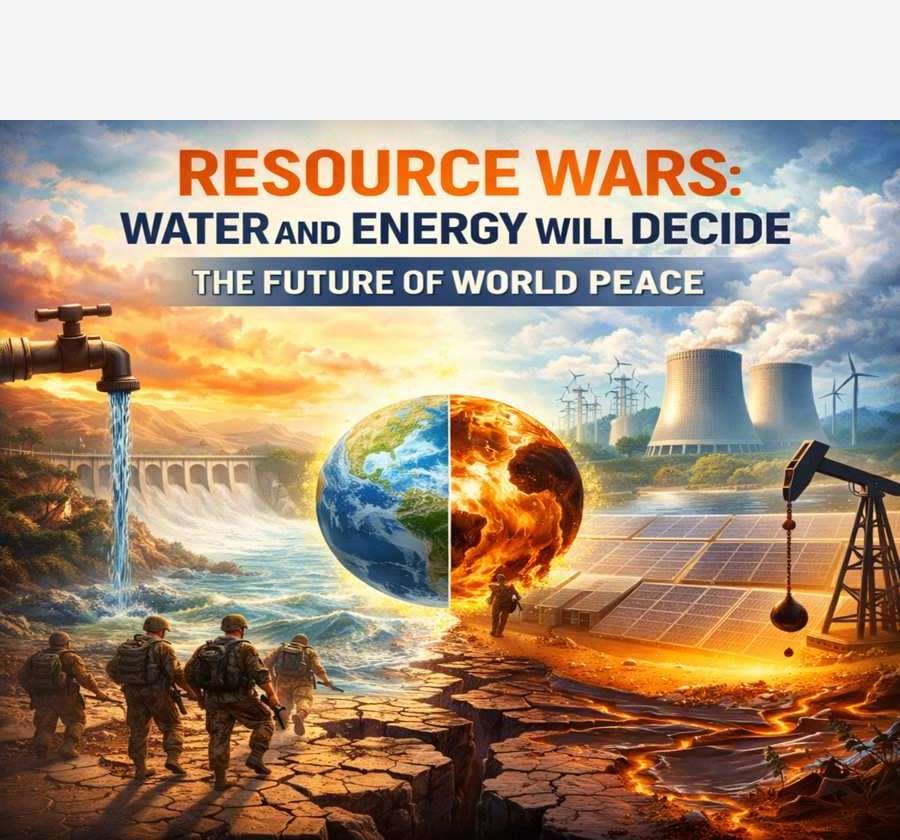
For most of human history, wars were fought over land, power, ideology, or religion. Empires rose and fell over territory, rulers clashed for dominance, and nations mobilized armies in the name of belief or identity. Yet as the twenty-first century advances, the nature of conflict is quietly changing. The most dangerous wars of the future may not begin with ideology or nationalism, but with something far more basic: access to water and energy.
Water and energy are the foundations of modern civilization. Without them, agriculture collapses, cities fail, economies stagnate, and governments lose legitimacy. As populations grow, climates change, and resources become unevenly distributed, competition over these essentials is intensifying. The question is no longer whether resource conflicts will shape global politics, but whether humanity can manage them without descending into violence.
In this emerging reality, world peace will depend less on military strength and more on how nations share, manage, and protect water and energy resources.
Why Resources Matter More Than Ever
Water and energy are not just commodities; they are survival systems. Every sector of society—food production, healthcare, industry, education, and security—depends on them. When access is stable and affordable, societies flourish. When it is disrupted, unrest follows.
Historically, abundant resources allowed countries to grow without confronting hard limits. Today, those limits are becoming unavoidable. Climate change is altering rainfall patterns, shrinking glaciers, and intensifying droughts. Fossil fuels are finite, while the transition to renewable energy is uneven and politically sensitive.
As scarcity grows, resources stop being neutral and become strategic. Control over water and energy increasingly means control over stability, influence, and power.
Water: The Most Critical Resource of the Century
Water has no substitute. Unlike energy, which can be generated from different sources, water cannot be replaced or manufactured at scale. Human bodies, crops, and ecosystems depend on it directly.
Yet freshwater availability is declining in many regions. Rivers are drying, aquifers are being over-extracted, and pollution is contaminating existing supplies. At the same time, demand is rising due to population growth, urbanization, and industrial agriculture.
Many of the world’s major rivers cross national borders. When upstream countries build dams, divert flows, or overuse water, downstream nations suffer. These tensions are not hypothetical—they are already shaping diplomacy and hostility.
Water disputes may not always trigger immediate wars, but they create long-term instability, mistrust, and geopolitical pressure. A thirsty society is an angry society.
Energy: Powering Peace or Fueling Conflict
Energy is the engine of modern life. Electricity powers hospitals and schools, fuels industry, enables communication, and supports national defense. Countries with reliable energy systems tend to be more stable; those without face economic decline and political unrest.
For decades, fossil fuels—oil, gas, and coal—dominated global energy systems. Control over these resources shaped alliances, invasions, and foreign policy decisions. Many conflicts of the past century were directly or indirectly linked to oil.
Today, the world is entering a new energy transition. Renewable sources like solar, wind, and hydropower are expanding, but not evenly. Some nations possess abundant renewable potential; others remain dependent on imports or aging fossil fuel infrastructure.
This uneven transition risks creating new forms of energy inequality. Countries that control advanced energy technology or critical minerals may gain disproportionate influence. Those left behind may experience economic and political instability—fertile ground for conflict.
Climate Change: The Multiplier of Resource Conflict
Climate change does not create resource wars by itself, but it multiplies existing tensions. Rising temperatures reduce crop yields, increase water stress, and strain energy systems. Extreme weather damages infrastructure and displaces populations.
When climate impacts hit regions already struggling with governance, poverty, or ethnic division, the risk of conflict increases dramatically. Competition over shrinking resources intensifies, and blame is easily assigned—often along political or identity lines.
Climate-driven migration further complicates the picture. As people move in search of water, food, and energy security, host regions may feel overwhelmed, leading to social friction and political backlash.
In this way, environmental stress transforms local resource issues into regional or global security challenges.
From Resource Scarcity to Political Instability
Governments are judged by their ability to provide basic services. When water taps run dry or electricity grids fail, public trust erodes quickly. Protests, unrest, and even state collapse can follow.
History shows that food shortages, fuel price spikes, and water crises often precede political upheaval. Resource scarcity exposes inequalities and governance failures, making societies more vulnerable to radicalization and violence.
In fragile states, armed groups may exploit resource shortages to gain support or control territory. In stronger states, resource insecurity can push leaders toward aggressive policies to secure supplies externally.
Thus, resource insecurity does not remain an environmental issue—it becomes a political and security issue.
Are Resource Wars Inevitable?
Despite growing concern, resource wars are not inevitable. Scarcity alone does not cause conflict; mismanagement, inequality, and lack of cooperation do.
Water and energy can be sources of cooperation as much as competition. Shared rivers can encourage joint management. Cross-border energy grids can build interdependence. Renewable energy can reduce reliance on contested fossil fuels.
The difference between conflict and cooperation lies in governance, diplomacy, and long-term thinking. When resources are treated as zero-sum prizes, conflict follows. When they are treated as shared responsibilities, peace becomes possible.
The Role of Technology and Innovation
Technology offers powerful tools to reduce resource conflict. Efficient irrigation, desalination, wastewater recycling, and smart grids can ease water stress. Renewable energy and storage technologies can decentralize power production and increase resilience.
However, technology alone is not enough. Without fair access and inclusive policies, technological advances can deepen inequality. Wealthy regions may secure solutions while poorer communities fall further behind.
Peace depends not just on innovation, but on how innovation is distributed.
Global Inequality and the Ethics of Resource Use
One of the greatest threats to peace is inequality in resource consumption. A small portion of the world’s population consumes a disproportionate share of water and energy, while billions struggle to meet basic needs.
This imbalance fuels resentment and undermines global cooperation. Calls for conservation ring hollow when consumption patterns remain unjust.
A peaceful future requires ethical resource governance—recognizing that water and energy are not luxuries, but human necessities. Policies must prioritize sustainability, equity, and long-term resilience over short-term profit or political gain.
Militarization vs Cooperation
As resource pressures grow, some nations respond by securitizing water and energy—placing them under military protection or using force to secure access. This approach may provide temporary control but increases the risk of escalation and mistrust.
Militarization treats symptoms, not causes. It does not create more water or energy; it simply redistributes scarcity through power.
Cooperation, on the other hand, expands possibilities. Shared infrastructure, joint investment, and multilateral agreements reduce uncertainty and build trust. While cooperation requires patience and compromise, it offers far greater returns than confrontation.
Education and Public Awareness: The Missing Link
Public understanding of resource issues is often shallow. Water flows from taps, electricity from sockets, and their fragility remains invisible—until crisis strikes.
Education plays a crucial role in preventing resource wars. Informed citizens are more likely to support conservation, fair policies, and international cooperation. They are less likely to accept simplistic narratives that blame outsiders for complex problems.
Peaceful resource management begins with educated minds that understand limits, trade-offs, and shared responsibility.
The Future of World Peace Depends on Resource Wisdom
The wars of the future may not look like those of the past. They may unfold slowly, through diplomatic breakdowns, economic pressure, cyber conflict, and proxy struggles over infrastructure rather than open battlefields.
Water shortages and energy insecurity will test international systems more severely than ideology ever did. They will force humanity to confront uncomfortable truths about consumption, inequality, and sustainability.
World peace in the twenty-first century will depend on whether nations choose cooperation over domination, foresight over short-term gain, and ethics over exploitation.
Conclusion: Choosing Peace in a Resource-Limited World
Water and energy will define the boundaries of future peace. They can either become catalysts for conflict or foundations for cooperation. The choice is not predetermined; it is political, ethical, and collective.
If humanity treats resources as weapons, wars will follow. If it treats them as shared lifelines, peace becomes achievable.
The greatest challenge of our time is not the lack of resources, but the lack of wisdom in managing them. World peace will not be decided on battlefields alone, but in how humanity shares water, powers its future, and respects the limits of the planet.
The age of resource wars is approaching. Whether it becomes an age of resource cooperation will determine the fate of global peace.


