



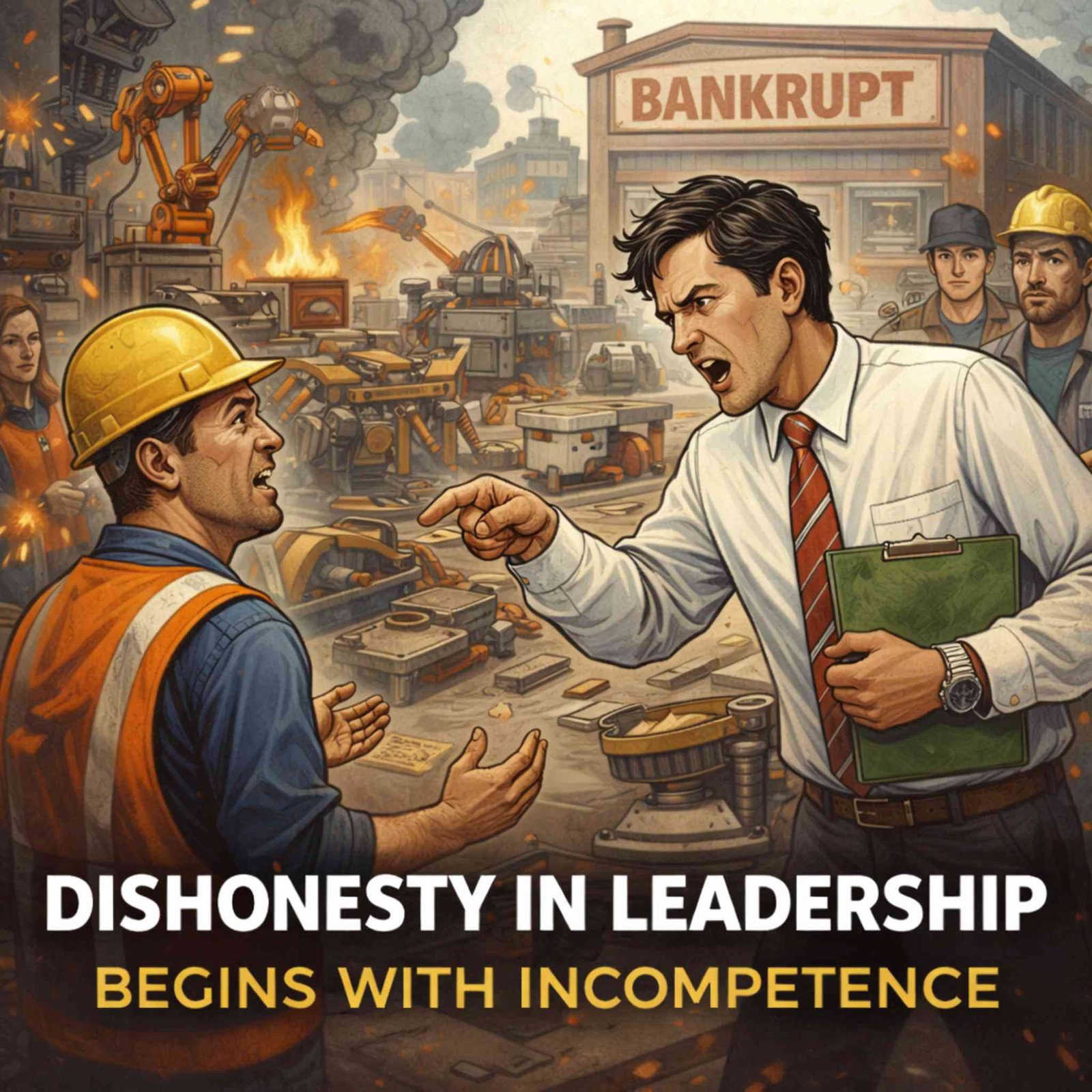
Dishonesty in leadership is often imagined as deliberate deception, corruption, bribery, or abuse of power. These are visible failures—easy to condemn and, at times, easier to punish. Yet the most damaging dishonesty in leadership often begins much earlier and much quieter. It begins with incompetence.
When leaders lack the knowledge, skills, or judgment required for their roles but continue to occupy positions of authority, dishonesty takes root. It may not start with lies spoken aloud, but with truths avoided. It may not involve stolen money, but it steals trust, time, morale, and opportunity. Incompetence, when unacknowledged and unaddressed, becomes the first act of dishonesty.
Leadership demands more than authority. It demands ability, responsibility, and integrity. When any of these are missing, dishonesty is inevitable.
Incompetence Is Not the Same as Inexperience
It is important to distinguish between incompetence and inexperience. Every leader begins as a learner. Ethical leadership allows room for growth, mentorship, and mistakes made in good faith.
Incompetence becomes dishonest when a leader:
- Knows they lack essential skills but hides it
- Refuses to learn or improve
- Blocks capable people to protect their position
- Uses authority to mask inability
Inexperience seeks guidance. Incompetence seeks cover.
The dishonesty lies not in not knowing—but in pretending to know.
How Incompetence Forces Leaders to Lie
An incompetent leader often finds themselves unable to meet expectations. Deadlines slip. Decisions fail. Strategies collapse. Faced with these realities, the leader has two choices: admit limitations or hide them.
Too often, leaders choose concealment.
This concealment takes many forms:
- Blaming subordinates
- Manipulating reports
- Suppressing bad news
- Avoiding transparency
- Redefining failure as success
What begins as insecurity evolves into systematic dishonesty. The leader is no longer serving the organization; they are protecting their image.
Dishonesty Through Silence and Avoidance
Not all dishonesty is spoken. Silence can be equally deceptive.
Incompetent leaders often avoid difficult conversations because they lack clarity. They delay decisions because they do not understand consequences. They remain silent in meetings because they cannot contribute meaningfully.
This silence misleads others into believing things are under control. Employees wait. Projects stall. Problems grow.
Silence becomes a lie when it creates a false sense of competence.
The Fear That Drives Dishonest Leadership
At the core of incompetent leadership is fear:
- Fear of exposure
- Fear of losing authority
- Fear of being replaced
- Fear of accountability
Fear pushes leaders to prioritize self-preservation over truth. Instead of asking questions, they issue orders. Instead of listening, they dominate. Instead of admitting weakness, they perform confidence.
This performance is dishonest because it replaces substance with appearance. Authority becomes theater.
How Incompetence Corrupts Decision-Making
Leadership decisions shape organizations, communities, and nations. When leaders lack competence, decisions are no longer grounded in evidence or understanding.
Instead, decisions are based on:
- Personal bias
- Political loyalty
- Emotional reaction
- Guesswork
- External pressure
To justify poor decisions, incompetent leaders often distort facts or selectively present information. Over time, dishonesty becomes embedded in the decision-making process itself.
Truth becomes inconvenient. Reality becomes negotiable.
The Damage to Ethical Culture
Leaders set the moral tone of any organization. When incompetence leads to dishonesty at the top, ethical erosion spreads downward.
Employees observe:
- Mistakes being hidden rather than corrected
- Loyalty rewarded over merit
- Truth-tellers sidelined
- Silence encouraged
Gradually, honesty feels unsafe. Integrity feels naïve. Survival becomes the priority.
In such environments, even competent and ethical individuals are pressured to compromise. Dishonesty becomes cultural, not individual.
How Incompetent Leaders Punish Competence
One of the clearest signs of dishonest leadership is hostility toward competence.
Capable individuals expose incompetence simply by performing well. They ask informed questions. They propose better solutions. They challenge flawed logic.
Instead of welcoming this, incompetent leaders often respond by:
- Ignoring expertise
- Blocking promotions
- Undermining reputations
- Labeling competence as “disloyalty”
This behavior is deeply dishonest because it prioritizes ego over organizational success.
The Myth of Authority Equals Ability
Many societies confuse authority with competence. Titles, seniority, and power are mistaken for proof of ability.
This myth allows incompetent leaders to hide behind position rather than performance. It discourages scrutiny and normalizes failure.
Yet authority does not create ability. Ability creates legitimate authority.
When this truth is ignored, dishonesty flourishes.
Public Leadership and Institutional Dishonesty
In government and public institutions, the consequences of incompetent leadership are magnified. Policies affect millions. Resources are public. Trust is foundational.
When leaders lack competence:
- Policies fail
- Services decline
- Public funds are wasted
- Accountability weakens
To maintain legitimacy, leaders may distort data, shift blame, or silence critics. Public dishonesty becomes systemic.
Citizens may not see corruption directly, but they experience it through inefficiency, injustice, and frustration.
Incompetence Is Often Protected, Not Exposed
Ironically, incompetent leaders often survive longer than competent ones—especially in systems without accountability.
Why?
- They reward loyalty
- They avoid transparency
- They maintain appearances
- They control information
Because exposure threatens them, they resist audits, feedback, and reform. Dishonesty becomes a survival strategy.
When Incompetence Becomes Moral Failure
Incompetence alone is not a moral crime. Everyone has limits. Systems fail. Promotions misalign.
The moral failure occurs when leaders:
- Recognize their inability
- Refuse to learn or step aside
- Continue to exercise authority
- Allow harm to persist
At this point, incompetence crosses into dishonesty. It is no longer accidental—it is chosen.
The Courage to Admit Incompetence
Honest leadership requires humility. Admitting limitations is not weakness; it is ethical strength.
Ethical leaders:
- Seek training
- Ask for help
- Delegate to experts
- Accept feedback
- Step aside when necessary
These actions protect institutions and preserve trust.
In contrast, dishonest leaders cling to roles they cannot fulfill, leaving behind damaged systems and demoralized people.
Why Stepping Aside Is an Act of Integrity
Few actions demonstrate integrity more clearly than stepping aside for someone more capable.
History respects leaders who placed mission above ego. Organizations recover faster when leadership transitions are honest rather than defensive.
Stepping aside prevents dishonesty from deepening. It stops incompetence from becoming corruption.
Building Systems That Prevent This Dishonesty
Preventing dishonesty rooted in incompetence requires structural safeguards:
- Clear qualification standards
- Continuous leadership development
- Performance-based evaluation
- Transparent decision-making
- Protection for whistleblowers
But no system can replace personal integrity. Leadership ultimately depends on individual choice.
Conclusion: Truth Is the First Responsibility of Leadership
Dishonesty in leadership rarely begins with grand corruption. It begins quietly—with incompetence unacknowledged and ability ignored.
When leaders pretend to know what they do not, when they hide behind authority instead of learning, when they silence truth to protect position, dishonesty becomes inevitable.
Leadership is not defined by power, title, or confidence. It is defined by competence, responsibility, and honesty.
In a world facing complex challenges, societies cannot afford leadership built on illusion. The first duty of any leader is truth—about the world, about the organization, and about themselves.
When incompetence is denied, dishonesty follows. And when dishonesty leads, institutions fail.


