



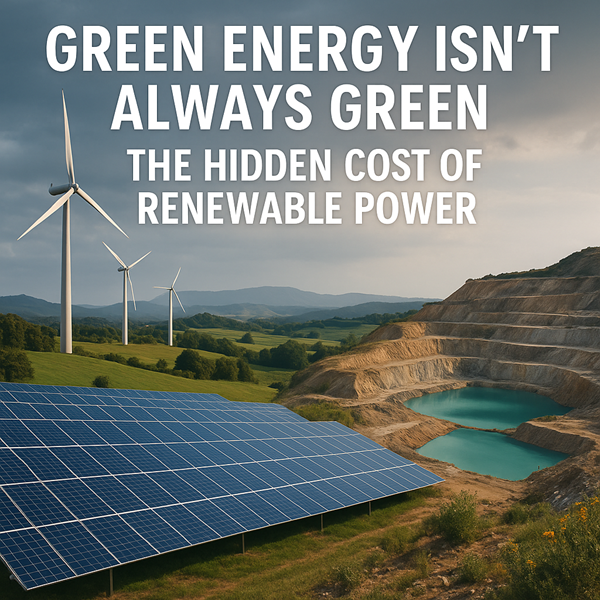
For decades, renewable energy has been presented as the ultimate solution to humanity’s greatest challenge: saving the planet. Solar panels glinting under the sun, wind turbines gracefully turning on distant hills, and hydroelectric dams powering entire cities have become powerful symbols of hope. Governments promote them, corporations invest in them, and activists defend them passionately. The message seems clear—green energy is clean, ethical, and harmless.
But the reality is far more complex.
While renewable energy is undeniably cleaner than fossil fuels in many respects, calling it “fully green” hides a set of environmental, social, and economic costs that are rarely discussed openly. This article does not argue against renewable energy. Instead, it asks an uncomfortable but necessary question: What is the true price of going green?
Understanding these hidden costs is essential if the world is to build an energy future that is not only low-carbon, but also genuinely sustainable.
The Promise of Renewable Energy
Renewable energy sources—solar, wind, hydro, geothermal, and biomass—are designed to reduce dependence on coal, oil, and gas. They emit little to no greenhouse gases during operation and help countries meet climate targets under global agreements.
Key benefits often highlighted include:
- Reduced carbon emissions
- Lower air and water pollution
- Energy independence
- Long-term cost savings
These advantages are real and important. However, focusing only on the benefits creates an incomplete picture—one that ignores what happens before and after renewable energy is produced.
Mining: The Dirty Beginning of Clean Energy
Every solar panel, wind turbine, and battery begins its life in a mine.
Rare Earth Minerals and Environmental Damage
Renewable technologies rely heavily on minerals such as lithium, cobalt, nickel, copper, and rare earth elements. Mining these materials often causes:
- Deforestation
- Soil erosion
- Water contamination
- Loss of biodiversity
Lithium mining, for example, consumes massive amounts of water in already dry regions, threatening agriculture and local communities. Cobalt mining has been linked to severe environmental degradation and unsafe labor practices.
In many cases, the environmental destruction occurs in developing countries, far from the consumers who benefit from green energy technologies.
Human Cost: Communities Behind the Curtain
Renewable energy’s supply chain is global—and deeply unequal.
Labor Exploitation and Ethical Concerns
Reports have documented:
- Child labor in mineral extraction
- Unsafe working conditions
- Displacement of indigenous communities
Villages have been uprooted to make space for wind farms or hydroelectric projects. Rivers have been diverted, destroying traditional fishing and farming livelihoods.
The uncomfortable truth is this: clean energy for wealthy nations sometimes depends on suffering in poorer ones.
Solar Power: Clean Energy with a Toxic Shadow
Solar panels are often seen as the purest form of green energy. Yet their lifecycle raises serious concerns.
Manufacturing Pollution
Producing solar panels requires:
- High energy input (often from fossil fuels)
- Toxic chemicals such as cadmium and lead
- Large industrial facilities that generate waste
In countries where environmental regulations are weak, manufacturing plants can release pollutants into air and water systems.
Solar Waste Crisis
Solar panels typically last 20–30 years. As early installations reach end-of-life, the world faces a growing solar waste problem:
- Panels are difficult and expensive to recycle
- Toxic materials can leak into the environment
- Millions of tons of waste are expected by 2050
Without proper recycling systems, today’s green solution could become tomorrow’s toxic legacy.
Wind Energy: Silent Killers in the Sky?
Wind turbines are powerful symbols of sustainability—but they are not without impact.
Wildlife Disruption
Wind farms have been linked to:
- Bird and bat fatalities
- Disruption of migration routes
- Noise pollution affecting animals and humans
While modern designs reduce some risks, large-scale wind installations still alter ecosystems significantly.
Land Use and Community Resistance
Wind farms require vast areas of land. In some regions, residents oppose them due to:
- Visual pollution
- Noise disturbances
- Falling property values
This resistance highlights a key issue: green energy projects often ignore social acceptance in the rush to meet targets.
Hydropower: Renewable but Not Innocent
Hydropower is one of the oldest renewable energy sources, yet it can be one of the most destructive.
Ecological Destruction
Large dams:
- Flood forests and farmland
- Disrupt fish migration
- Alter river ecosystems permanently
In tropical regions, flooded vegetation can release methane—a potent greenhouse gas—making some hydropower projects less climate-friendly than expected.
Human Displacement
Millions of people worldwide have been displaced by dam projects, often without fair compensation or long-term support.
Batteries: The Backbone of Renewables—and a Growing Threat
Renewable energy depends heavily on energy storage, especially batteries.
Environmental Impact of Battery Production
Battery manufacturing involves:
- Intensive mining
- Chemical processing
- High carbon emissions during production
The Battery Waste Problem
Recycling lithium-ion batteries is complex and costly. Improper disposal can lead to:
- Fires
- Toxic leaks
- Long-term environmental contamination
As electric vehicles and renewable storage expand, battery waste could become one of the biggest environmental challenges of the coming decades.
Carbon Footprint: The Hidden Emissions
Renewable energy systems are often labeled “zero-emission,” but this applies only during operation.
When considering the full lifecycle—mining, manufacturing, transportation, installation, maintenance, and disposal—renewables still produce emissions. While far lower than fossil fuels overall, these emissions are not negligible and must be acknowledged honestly.
Economic and Social Inequality
Who Pays, Who Benefits?
Renewable energy infrastructure often:
- Raises electricity costs initially
- Requires government subsidies
- Benefits large corporations more than local communities
In developing countries, people may lose land or livelihoods without receiving affordable energy in return.
A green transition that increases inequality risks losing public trust—and ultimately failing.
The Myth of a Perfect Solution
The biggest danger of the “green energy is perfect” narrative is complacency.
Believing renewables have no downsides can lead to:
- Poor planning
- Weak regulation
- Ignoring environmental justice
- Replacing one form of exploitation with another
Sustainability is not just about carbon reduction—it is about protecting ecosystems, respecting human rights, and ensuring fairness.
Toward Truly Sustainable Energy
Acknowledging the hidden costs of renewable energy does not mean rejecting it. It means improving it.
What Needs to Change
- Stronger environmental regulations for mining
- Ethical supply chains with labor protections
- Investment in recycling and circular economy models
- Community participation in project planning
- Diversified energy strategies, including efficiency and conservation
Energy efficiency, reduced consumption, and smarter urban design are just as important as new power generation.
Conclusion: Green, But With Open Eyes
Renewable energy remains essential in the fight against climate change. The world cannot afford to continue burning fossil fuels at current rates. However, blind faith in green energy is just as dangerous as denial of climate science.
True sustainability demands honesty.
Green energy is not always green—but it can become greener. Only by confronting its hidden costs can humanity build an energy future that is not only low-carbon, but also just, ethical, and truly sustainable.
The real question is not whether we should go green—but how responsibly we are willing to do it.


