

A masjid is first and foremost a sacred sanctuary. It is the place where believers gather to pray, reflect, and reconnect with their Creator. The rhythm of daily prayer disciplines the heart, refines character, and strengthens moral awareness. Within the masjid, people stand side by side regardless of wealth, race, or status, embodying equality before Allah. This spiritual function must always remain central. However, limiting the masjid to ritual alone overlooks the broader vision embedded in the Qur’an.
The Qur’an is not merely a book of personal devotion; it is a guide for life. It calls humanity to think, reflect, observe, and seek knowledge. It repeatedly invites people to examine the natural world, understand its signs, and act responsibly within it. Therefore, a masjid guided by the Qur’an should not only cultivate spirituality but also inspire research, innovation, and community development. It should become a living institution where faith and knowledge reinforce each other.
Historically, this was the case. During the time of Prophet Muhammad, the masjid in Madinah functioned as more than a prayer hall. It was a place of consultation, education, social welfare, and strategic planning. Community problems were discussed and addressed there. Knowledge was shared. Decisions were made collectively. The masjid was the heart of an emerging civilization. Prayer did not separate believers from worldly responsibilities; it prepared them to fulfill them with integrity.
In today’s world, many masjids have beautiful architecture but limited functional scope. They may organize religious gatherings and collect donations, yet often remain detached from the pressing scientific, economic, and social challenges facing their communities. Reimagining the masjid as a center for research and innovation does not mean turning it into a laboratory in the literal sense. Rather, it means cultivating a culture of inquiry, critical thinking, and structured problem-solving guided by Qur’anic ethics.
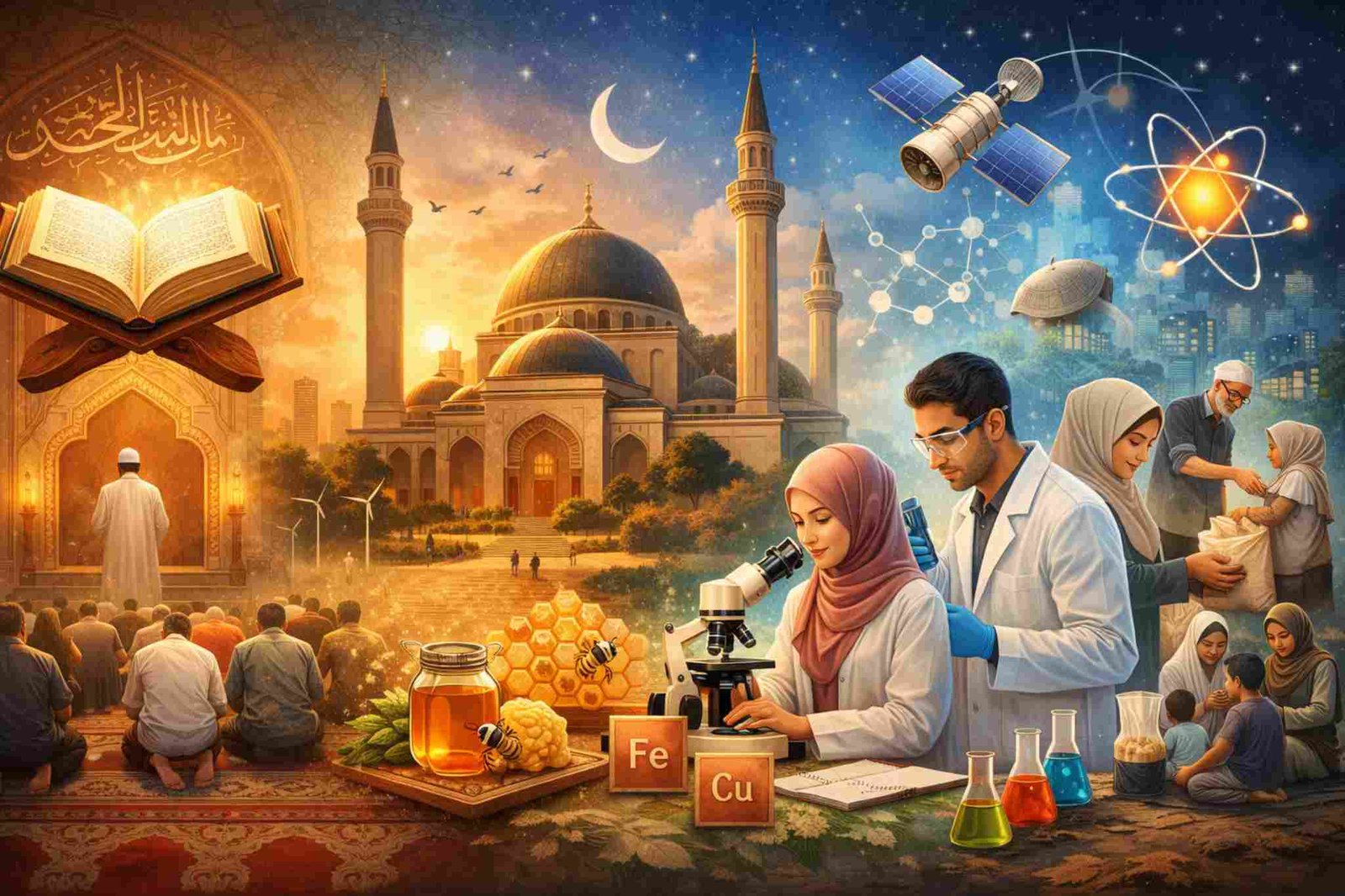
The Qur’an repeatedly encourages reflection on creation. One powerful example appears in Surah Al-Hadid, which states that iron was “sent down” and that in it there is “great strength and benefits for mankind.” Iron is fundamental to human civilization. It is essential in construction, transportation, industry, and infrastructure. In the human body, iron is a core component of hemoglobin, enabling oxygen transport in the blood. Modern astrophysics explains that heavy elements such as iron are formed in massive stars and dispersed through cosmic events before becoming part of planetary systems. While the Qur’an is not a physics textbook, its reference to iron as a material of immense strength and benefit highlights its civilizational importance and invites reflection.
A masjid that studies such verses can inspire young people to explore materials science, engineering, and medicine. Instead of treating these verses as mere recitations, the community can examine their implications. How does iron shape modern technology? How does responsible use of natural resources align with ethical principles? These discussions connect scripture with scientific curiosity.
Another striking example is honey, mentioned in Surah An-Nahl. The Qur’an describes how bees produce a drink of varying colors in which there is healing for mankind. Modern science confirms that honey has antibacterial and antimicrobial properties. Medical-grade honey is used in wound treatment. It contains antioxidants and supports immune health. The Qur’an does not claim that honey cures every disease, but it clearly identifies its healing value. A masjid-based educational program can use this verse to encourage study in biology, medicine, and environmental science. It can also highlight the importance of ecological preservation, since bees play a crucial role in pollination and food systems.
Similarly, the Qur’an references copper in Surah Saba, describing molten copper made to flow. Copper is one of the earliest metals used by humans. It is highly conductive and essential for electrical systems. It also has antimicrobial properties and is widely used in plumbing and medical environments. Reflecting on such materials encourages awareness of how natural resources support human advancement. A masjid that fosters discussions around these topics can cultivate appreciation for science while grounding it in ethical responsibility.
The Qur’an also draws attention to human development in the womb, describing stages from a drop to a clinging substance to a developed form. While expressed in accessible language suitable for all eras, these descriptions align with the concept of staged embryological development. Such verses inspire reflection on biology and the complexity of life. They encourage humility and gratitude while stimulating scientific inquiry.
Water is another recurring theme. The Qur’an declares that every living thing is made from water. Modern biology confirms that life depends fundamentally on water. Cells are largely composed of it, and no known life can survive without it. A masjid that educates its community about water conservation, environmental sustainability, and public health connects this Qur’anic insight with practical action.
The Qur’an also speaks of balance in creation. Ecological balance is a core principle in environmental science. Disruption of this balance leads to climate instability, biodiversity loss, and resource depletion. By teaching environmental stewardship as a spiritual responsibility, the masjid can become a center for sustainable development initiatives. Recycling programs, tree planting campaigns, and energy efficiency projects can emerge from this understanding.
In addition to natural sciences, the Qur’an promotes intellectual discipline and moral accountability. It encourages moderation in eating and drinking, which aligns with modern preventive medicine. Excess consumption contributes to chronic diseases such as obesity and diabetes. By promoting balanced lifestyles, the masjid contributes to public health.
The integration of scientific reflection within the masjid must be approached responsibly. The Qur’an is primarily a book of guidance, not a technical manual. It should not be forced into artificial scientific interpretations. However, its consistent invitation to observe nature and think critically establishes a foundation for intellectual exploration. The goal is not to prove every scientific discovery through scripture, but to inspire a mindset that values knowledge and ethical progress.
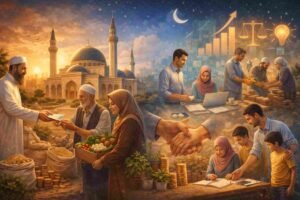
Community development naturally flows from this integration. A masjid that cultivates research-oriented thinking can assess local challenges. It can study patterns of unemployment, educational gaps, and health concerns. It can collaborate with professionals within the community to design targeted initiatives. For example, if youth lack digital skills, training workshops can be organized. If small businesses struggle, mentorship programs can be introduced. If public health awareness is low, seminars led by medical professionals can be hosted.
Charity can also be restructured strategically. Instead of distributing temporary aid repeatedly, funds can support skill acquisition, entrepreneurship, and sustainable income generation. This approach reflects the Qur’anic emphasis on dignity and empowerment. Economic assistance becomes a pathway to independence rather than dependency.
Serving humanity beyond religious boundaries further strengthens social harmony. A masjid that supports the poor in its locality regardless of faith demonstrates justice and compassion. Such service builds trust and reduces prejudice. It transforms the masjid into a symbol of ethical leadership rather than isolation.
Youth engagement is critical. Young minds are naturally curious about science and technology. If the masjid provides a space where faith and inquiry coexist, it prevents the false dichotomy between religion and reason. Innovation clubs, science discussions, and research circles can be established. Students can be encouraged to pursue careers in engineering, medicine, environmental science, and technology while maintaining strong moral foundations.
Transparency and accountability are essential for this transformation. Leadership structures must be clear. Financial reporting should be open. Community members should participate in consultation processes. Innovation requires organization, and organization requires trust. A masjid that combines spiritual sincerity with professional management sets a powerful example.
The long-term vision is profound. If masjids globally adopt this integrated model, communities could witness significant change. Youth would gain direction and opportunity. Ethical business practices would spread. Environmental awareness would increase. Poverty would decline through structured empowerment. Social tensions would soften through inclusive service. The masjid would once again become the heart of a balanced civilization.
This vision does not dilute the sacred nature of prayer. On the contrary, it strengthens it. Prayer cultivates humility and accountability before Allah. That accountability guides research, innovation, and development in ethical directions. Without spirituality, knowledge may be misused. Without knowledge, spirituality may lack societal impact. The masjid is uniquely positioned to harmonize both.
In essence, a masjid should illuminate not only the prayer rows but also the pathways of discovery and progress. It should nurture scientists who are ethical, entrepreneurs who are honest, doctors who are compassionate, and leaders who are just. Guided by the Qur’an, it can inspire inquiry without arrogance and development without injustice.
When worship energizes research, when reflection inspires innovation, and when knowledge serves humanity, the masjid becomes more than a building. It becomes a center of light—spiritual light that fuels intellectual advancement and social responsibility. In a world often divided between faith and science, the masjid can stand as proof that the two, when guided by wisdom, are not enemies but partners in the service of humankind.


