



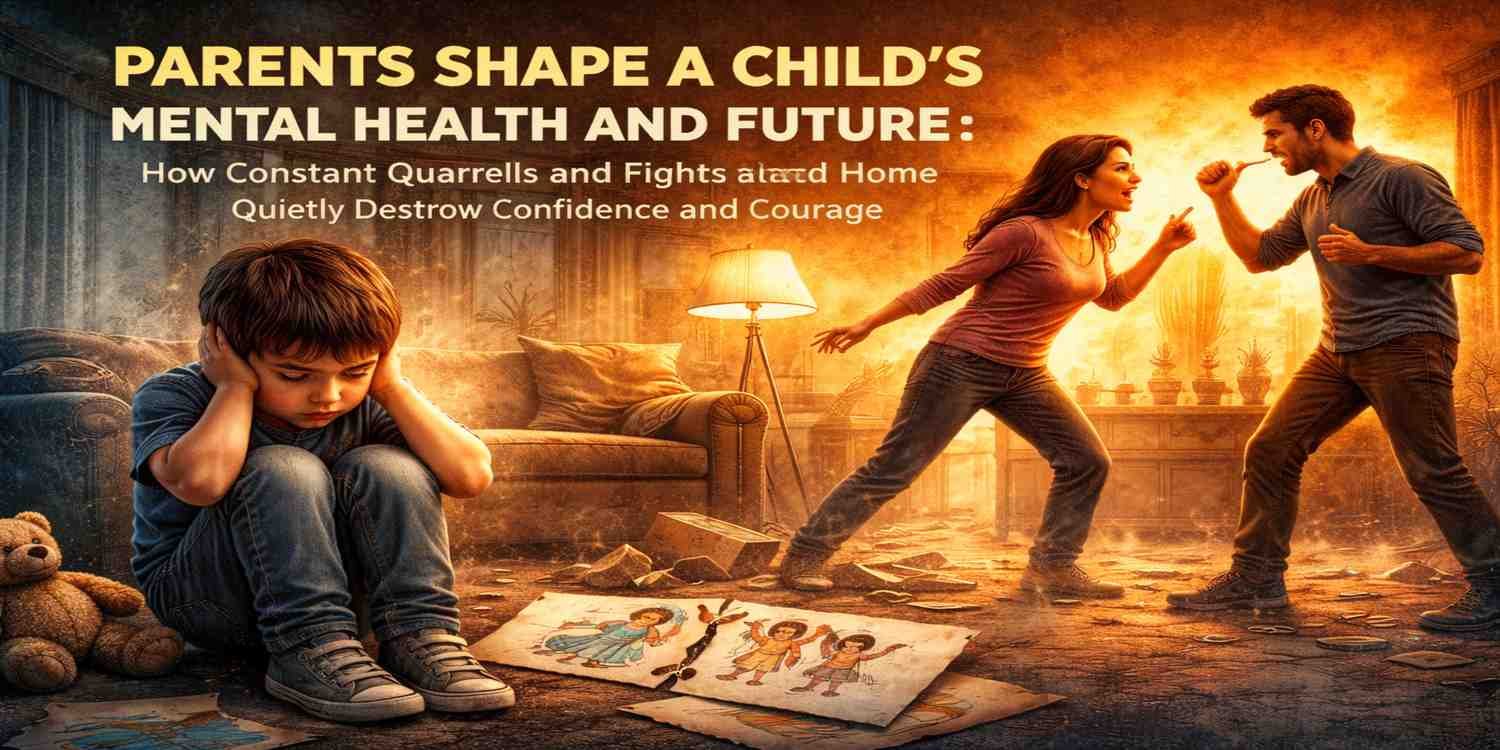
For a child, home is not just a physical space—it is their first emotional universe. It is where they learn what safety feels like, how love is expressed, and how conflicts are handled. Long before teachers, friends, or society influence them, parents shape a child’s mental health, emotional stability, and sense of self. When this foundational environment is filled with warmth, respect, and emotional security, children develop confidence and courage. But when home becomes a place of constant quarrels, shouting, scolding, or violence, the damage often begins quietly and invisibly.
Many parents underestimate the impact of their behavior on their children. They may believe that arguments are private matters, that children “don’t understand,” or that strict discipline builds strength. In reality, repeated exposure to parental conflict can deeply harm a child’s mental health, slowly eroding confidence, courage, emotional regulation, and trust in relationships. The scars may not be visible, but they often last a lifetime.
The Emotional World of a Child
Children experience the world very differently from adults. They do not have the emotional tools or cognitive maturity to understand conflict in context. When parents quarrel, children do not see “stress,” “financial pressure,” or “temporary disagreement.” Instead, they experience fear, confusion, and insecurity.
A child’s brain is still developing. Emotional experiences during childhood play a crucial role in shaping neural pathways related to stress, fear, trust, and self-worth. When a child regularly hears shouting, insults, or threats, their nervous system remains on high alert. Over time, this constant emotional tension can become their normal state.
Children often internalize conflict. They may believe they are the cause of their parents’ fights. Even when conflicts have nothing to do with them, children frequently carry guilt, thinking, “If I behaved better, they wouldn’t fight.” This misplaced responsibility can severely damage self-esteem.
How Parental Quarrels Destroy Confidence
Confidence grows when a child feels safe, supported, and valued. A household filled with conflict sends the opposite message. When parents argue constantly, children begin to doubt the stability of their world. This uncertainty undermines confidence in subtle but powerful ways.
Children from conflict-filled homes may:
- Fear expressing opinions or emotions
- Avoid taking risks or trying new things
- Develop excessive self-doubt
- Become overly cautious or withdrawn
They may hesitate to speak up at school, avoid leadership roles, or struggle with decision-making. Over time, they may come to believe that their voice does not matter or that making mistakes leads to punishment or rejection.
Confidence is not built through fear. It is built through emotional safety—and constant quarrels destroy that safety.
Courage Cannot Grow in Fear
Courage requires a sense of inner security. A child needs to believe that even if they fail, someone will stand beside them. In homes dominated by shouting, scolding, or violence, children learn the opposite lesson: mistakes lead to anger, humiliation, or harm.
As a result, many children raised in such environments become:
- Afraid of failure
- Emotionally dependent or overly compliant
- Unable to stand up for themselves
- Avoidant of challenges
Others may develop false courage—masking fear with aggression, defiance, or rebellion. While this may appear as strength, it is often a defense mechanism rooted in emotional pain.
True courage grows in calm, supportive environments—not in chaos.
Witnessing Conflict Is Harmful Even Without Direct Abuse
A common misconception is that children are only harmed if they are directly scolded or beaten. In reality, witnessing parental conflict alone is enough to cause psychological harm. Children who regularly observe fights between parents often experience anxiety comparable to those who experience direct punishment.
They may:
- Struggle with sleep and concentration
- Develop anxiety or depressive symptoms
- Become hyper-vigilant to emotional changes
- Feel responsible for maintaining peace at home
Some children take on the role of “emotional caretakers,” trying to mediate conflicts or suppress their own needs to avoid adding stress. This emotional burden is far too heavy for a child to carry.
The Long-Term Impact on Mental Health
The effects of growing up in a conflict-filled home often extend into adulthood. Many adults struggling with anxiety, low self-esteem, or relationship difficulties can trace their emotional patterns back to childhood experiences.
Common long-term consequences include:
- Chronic anxiety or depression
- Difficulty trusting others
- Fear of intimacy or commitment
- Poor emotional regulation
- Repeating unhealthy relationship patterns
Children learn how relationships work by watching their parents. When conflict, disrespect, or violence becomes normalized, children may unconsciously replicate these behaviors—or tolerate them—in their own adult relationships.
Thus, parental conflict does not just affect one generation; it can shape the emotional health of generations to come.
Scolding, Rebuking, and Physical Punishment: Discipline or Damage?
Many parents believe harsh discipline builds character. However, research and lived experience increasingly show that frequent scolding, humiliation, or physical punishment harms mental health rather than strengthening it.
Harsh parenting can lead to:
- Fear-based obedience rather than understanding
- Suppressed emotions
- Anger and resentment
- Reduced emotional intelligence
Children raised with fear may behave “well” in the short term but struggle with self-regulation, empathy, and confidence later in life. Discipline should teach, not intimidate. Guidance should correct behavior without damaging dignity.
The Silent Nature of Emotional Damage
One of the most dangerous aspects of emotional harm is that it often goes unnoticed. A child may continue to perform well academically, obey rules, and appear “normal” while silently struggling inside. Parents may believe their conflicts have no impact because the child does not openly complain.
However, emotional pain does not always express itself loudly. It often shows up later—as anxiety, burnout, emotional numbness, or difficulty forming healthy bonds. By the time the damage becomes visible, it may already be deeply rooted.
Breaking the Cycle: What Parents Can Do
The good news is that damage is not inevitable. Parents can protect their children’s mental health even during difficult times—if they act with awareness and responsibility.
Healthy steps include:
- Avoiding arguments in front of children
- Apologizing when mistakes are made
- Practicing calm communication
- Teaching emotional expression instead of suppressing it
- Seeking counseling or support when conflicts escalate
Children do not need perfect parents. They need emotionally responsible ones.
When parents model respect, accountability, and emotional regulation, children learn these skills naturally.
Teaching Through Behavior, Not Words
Children learn far more from what parents do than from what they say. A parent who lectures about respect but constantly shouts sends a confusing message. A parent who values calm dialogue teaches conflict resolution without saying a word.
Parents shape not just their children’s mental health, but their worldview—their understanding of love, safety, and self-worth. Every interaction matters.
Conclusion: The Power Parents Hold
Parents hold extraordinary power over their children’s mental health and future. A home filled with constant quarrels, scolding, and fear can quietly destroy a child’s confidence and courage, leaving emotional wounds that last far beyond childhood. These wounds may not bleed, but they shape thoughts, relationships, and life choices.
Raising mentally healthy children does not require wealth, perfection, or constant happiness. It requires emotional awareness, responsibility, and a commitment to making home a place of safety rather than fear.
When parents choose calm over conflict and understanding over aggression, they do more than protect their children’s mental health—they shape a stronger, more compassionate future for the next generation.
-Md Khairul Alom


