



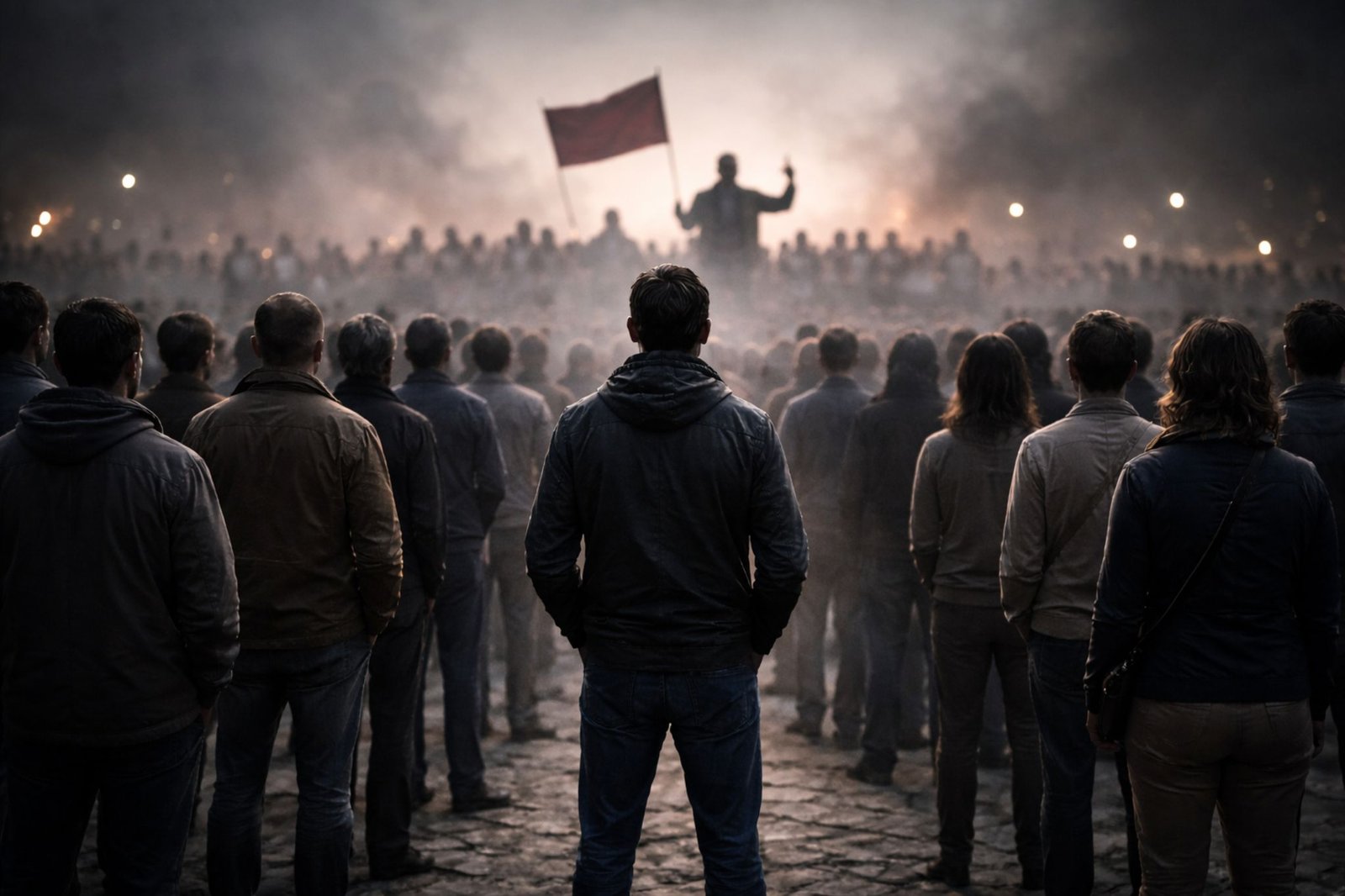
History rarely collapses because of villains alone. It collapses because of spectators. Loud extremists—whether political, religious, ideological, or social—have always existed. They shout, provoke, threaten, and destabilize. Yet time and again, societies do not fall at the first cry of extremism. They fall when decent, educated, capable people choose silence over responsibility.
Silence from good people is not neutral. It is not harmless. It is not wisdom. In critical moments, silence becomes permission—permission for injustice to grow, for hatred to normalize, and for extremism to claim the center stage uncontested. The most dangerous force in the world is not the extremist with a microphone, but the moral majority without a voice.
Loud Extremism Is Visible—Silence Is Invisible
Extremists are easy to identify. They speak loudly, act aggressively, divide deliberately, and often justify their actions with distorted logic or emotion. Because they are visible, societies often focus all attention on them—condemning their words, banning their organizations, or policing their actions.
Silence, however, operates quietly. It hides behind phrases like “This is not my problem,” “I don’t want trouble,” or “Let others handle it.” Silence does not protest in the streets or threaten stability openly. Instead, it erodes values slowly, invisibly, and relentlessly.
When good people stay silent, extremists gain something far more powerful than weapons or slogans: space. Space to spread. Space to recruit. Space to redefine what is acceptable.
Neutrality Is a Myth in Moral Crises
Many people believe silence equals neutrality. This belief is deeply flawed.
In situations of injustice, oppression, or hatred, neutrality always favors the oppressor. When a bully attacks a victim and the crowd watches quietly, the silence does not balance the scene—it empowers the bully. The same principle applies to societies.
Moral crises do not ask for perfection; they ask for participation. Silence sends a clear message: “You can continue. I will not stop you.” Extremists understand this better than anyone. They rely not on mass support, but on mass indifference.
History proves this repeatedly. In every era where atrocities occurred, there were far more silent observers than active perpetrators. Evil rarely succeeds because it is strong; it succeeds because good people choose comfort over courage.
Silence Normalizes the Abnormal
One of the most dangerous effects of silence is normalization. When extremist ideas are repeated without challenge, they slowly lose their shock value. Hate speech becomes “just opinion.” Discrimination becomes “tradition.” Violence becomes “reaction.”
Silence allows abnormal behavior to masquerade as normal discourse. Over time, the moral baseline of society shifts. What was once unacceptable becomes debatable. What was once debated becomes tolerated. What was once tolerated becomes policy.
This gradual shift does not happen overnight. It happens because reasonable people stay quiet while unreasonable voices dominate conversations—on television, social media, classrooms, workplaces, and political platforms.
Fear Is Understandable—But Not an Excuse
Many good people remain silent out of fear. Fear of social backlash. Fear of losing jobs. Fear of being misunderstood. Fear of online harassment. Fear of isolation.
These fears are real and human. But fear does not eliminate responsibility.
Courage does not mean the absence of fear—it means choosing values despite fear. When fear dictates morality, society becomes hostage to the loudest and most ruthless voices.
Silence driven by fear may protect individuals temporarily, but it damages communities permanently. A society that punishes truth-tellers more than extremists is already in decline.
Silence Is a Luxury the Vulnerable Cannot Afford
Those who can afford silence are usually those least affected by injustice. Marginalized groups—children, minorities, the poor, migrants, and the powerless—do not have the privilege of quiet disengagement. For them, extremism is not a debate; it is a daily reality.
When educated, influential, or privileged individuals stay silent, they indirectly abandon those without a voice. Silence becomes a betrayal of shared humanity.
Moral leadership does not require power or position. It requires the willingness to speak when others cannot. History remembers not only those who committed crimes, but those who watched silently while crimes unfolded.
Social Media Has Amplified Silence and Extremism Together
Ironically, in the digital age, silence has grown louder in its consequences. Algorithms reward outrage, not reason. Extremists dominate timelines because they generate reactions. Meanwhile, thoughtful individuals often withdraw, choosing not to engage.
This withdrawal creates a dangerous illusion: that extremist views are more common than they truly are. When moderate voices disappear, extremes appear dominant.
Silence online is not absence—it is distortion. It allows toxic narratives to trend uncontested, shaping perceptions, elections, policies, and even violence.
Speaking responsibly online does not require shouting or insulting. It requires clarity, consistency, and courage. Silence cedes digital space to those least deserving of influence.
Good People Are Waiting for Permission That Will Never Come
Many decent individuals wait for the “right time,” the “perfect words,” or the “safe moment” to speak. But moral moments do not come with invitations.
There will never be a universally comfortable time to defend truth. Extremists do not wait for approval; they exploit hesitation. Silence, therefore, is not patience—it is procrastination in moral duty.
The belief that “someone else will speak” is one of the greatest enablers of injustice. Collective silence is built from millions of individual delays.
Speaking Up Does Not Mean Becoming Extreme
One reason people stay silent is the false belief that opposing extremism requires becoming extreme in return. This is untrue.
Speaking up can be calm, rational, respectful, and firm. It can be done through writing, education, dialogue, voting, teaching, mentoring, or refusing to normalize harmful behavior.
The goal is not to shout louder than extremists, but to outlast them with reason. Extremism thrives on chaos; it withers under consistent truth.
Silence Corrupts the Speaker Too
Silence does not only harm society; it harms the silent individual. Repeatedly ignoring injustice dulls moral sensitivity. Over time, silence becomes habit, and habit becomes character.
When people compromise their values repeatedly for convenience, they lose clarity about what they stand for. The price of silence is not peace—it is internal erosion.
A society of silent individuals eventually becomes a society without principles.
The Responsibility of Good People
Good people do not need to be perfect, fearless, or famous. They need to be present.
Presence means questioning harmful narratives. Presence means refusing to laugh at cruelty. Presence means educating rather than ignoring. Presence means choosing integrity over comfort.
The antidote to loud extremism is not louder extremism—it is persistent, principled participation from ordinary people.
Conclusion: Silence Is a Choice—And So Is Courage
Silence is not accidental. It is a decision made every time injustice appears and we look away. Loud extremists are dangerous, but they are predictable. Silence from good people is far more dangerous because it is preventable.
History does not ask whether we were loud or quiet. It asks whether we were right—and whether we acted when it mattered.
The future will not be shaped by extremists alone. It will be shaped by what good people choose to do—or choose not to do.
In the end, silence speaks. And what it says can either protect humanity—or betray it.


