


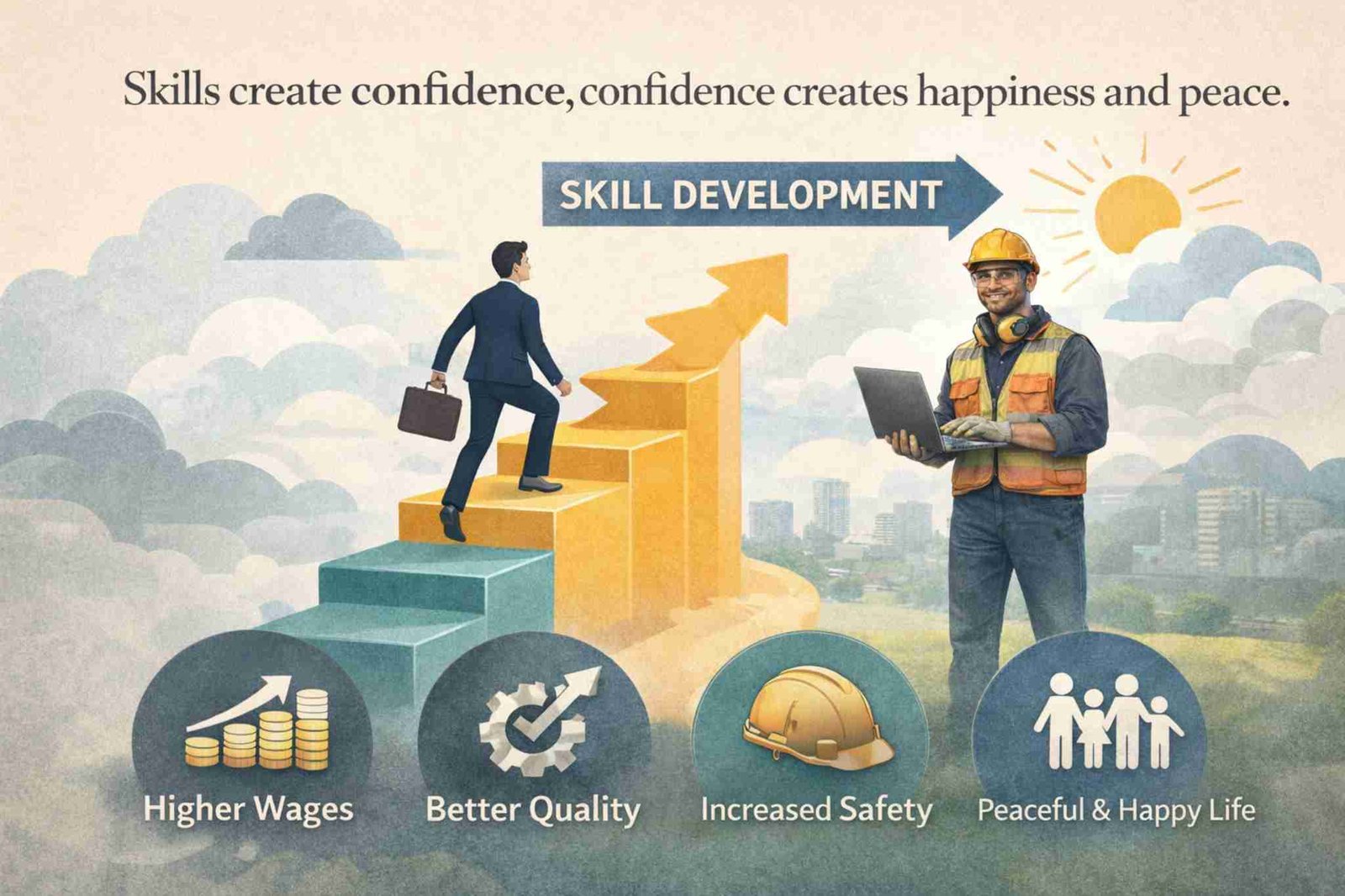
In a rapidly changing world defined by competition, uncertainty, and constant technological advancement, one truth stands above all others: skill development is the most important investment an individual, organization, and nation can make. Wealth, position, and even education alone cannot guarantee success or inner peace. What truly empowers people is the ability to do something well—to contribute meaningfully, solve problems, and adapt to change. Skills create confidence, and confidence, in turn, brings happiness and peace.
This relationship is not accidental. It is deeply rooted in human psychology, social stability, and economic growth. A skilled individual does not merely earn a living; they gain self-respect, independence, and a sense of purpose. When people feel capable and confident, they live with dignity, calmness, and optimism. This article explores why skill development is essential, how skills build confidence, and why confidence is the foundation of happiness and peace—both at personal and societal levels.
Understanding Skill Development
Skill development refers to the process of acquiring practical abilities, technical knowledge, and behavioral competencies that enable individuals to perform tasks effectively. Skills can be technical (such as operating machinery, coding, or accounting), professional (communication, leadership, teamwork), or life skills (problem-solving, adaptability, time management).
Unlike theoretical knowledge alone, skills are applied abilities. They allow individuals to transform knowledge into action and ideas into results. Skill development is not limited to formal education; it includes vocational training, on-the-job learning, apprenticeships, workshops, and lifelong self-learning.
In today’s world, where job roles evolve rapidly, skill development is no longer optional—it is essential for survival, growth, and fulfillment.
Skills as the Foundation of Confidence
Confidence is not something people are born with in fixed amounts. It grows through experience, mastery, and repeated success. Skills provide this foundation.
When a person develops a skill, they gain control over their work. They understand what they are doing and why they are doing it. This understanding eliminates fear, hesitation, and self-doubt. A skilled electrician trusts their wiring. A trained teacher trusts their ability to guide students. A competent worker trusts their hands and mind.
This trust in one’s own ability is confidence.
Unskilled individuals often feel insecure, dependent, and fearful of mistakes. They worry about job loss, criticism, and failure. Skilled individuals, on the other hand, face challenges with calmness because they know they can handle problems or learn new solutions.
Confidence born from skill is real and stable—not artificial or arrogant. It does not depend on praise or external validation. It comes from within.
Confidence and Psychological Well-Being
Confidence has a powerful impact on mental health. A confident person experiences less anxiety, less stress, and less fear about the future. They feel prepared rather than helpless.
When people know they have valuable skills, they stop feeling like burdens and start feeling like contributors. This sense of usefulness is deeply connected to human happiness. People want to feel needed, capable, and respected.
Confidence also reduces comparison and jealousy. Skilled individuals focus on growth rather than competition. They measure success by improvement, not by outperforming others. This mindset brings inner peace.
In contrast, lack of skills often leads to frustration, inferiority, and emotional instability. When people feel incapable, they become anxious, angry, or withdrawn. Skill development is therefore not just an economic necessity—it is a psychological safeguard.
Happiness Through Self-Reliance
One of the strongest sources of happiness is self-reliance. Skilled people do not feel trapped. They know they can earn, adapt, and rebuild if necessary. This freedom from constant fear brings deep satisfaction.
Skill development allows individuals to:
- Earn a stable income
- Improve their living standards
- Support their families
- Make independent life choices
These abilities create dignity. Happiness is difficult without dignity.
Moreover, skilled individuals enjoy their work more. Mastery turns work from a burden into a meaningful activity. Whether it is craftsmanship, teaching, engineering, or service work, skill transforms effort into pride.
People are happiest when they are improving and contributing—and skills make both possible.
Peace Comes From Security and Purpose
Peace is not merely the absence of conflict; it is the presence of stability, security, and meaning. Skills provide all three.
A skilled person feels secure because they are employable and adaptable. Even in uncertain economic times, they trust their ability to find opportunities or create new ones. This sense of security reduces fear, which is the root of unrest.
Skills also provide purpose. A person who knows their role and value in society feels connected rather than lost. Purpose brings calmness, direction, and patience.
At a broader level, societies with skilled populations experience less crime, less social unrest, and more cooperation. Unemployment and frustration often fuel conflict, while skill-based employment promotes peace and social harmony.
Skill Development and Economic Stability
From an economic perspective, skill development increases productivity, efficiency, and innovation. Skilled workers produce better results with fewer resources. This reduces wastage, lowers costs, and increases profitability for businesses.
When industries are productive, economies grow. When economies grow, governments can invest in education, healthcare, and social welfare—further improving quality of life.
More importantly, skill development shifts economies from low-wage labor to high-value production. This transition is essential for sustainable national growth.
A skilled workforce does not depend on charity or aid. It builds its own prosperity.
Reducing Unemployment and Inequality
Unemployment is rarely caused by a lack of jobs alone; it is often caused by a lack of skills. Employers seek capable workers, not just degree holders. Skill development bridges this gap.
When people are skilled, they are employable across multiple sectors. This reduces long-term unemployment and underemployment. As income levels rise, poverty decreases.
Skill development also reduces inequality. It gives people from disadvantaged backgrounds a chance to compete fairly. Skills do not discriminate—they reward effort, discipline, and learning.
In this way, skill development promotes social justice and inclusive growth.
Organizational Benefits of Skilled and Confident Workers
Organizations thrive when their employees are skilled and confident. Confident employees communicate better, solve problems faster, and take responsibility for outcomes.
Skilled workers:
- Make fewer errors
- Follow quality and safety standards
- Require less supervision
- Adapt to new technologies easily
This creates a positive work environment. Stress decreases, teamwork improves, and productivity increases. Employees feel valued, and employers benefit from loyalty and efficiency.
A confident workforce is the backbone of a successful organization.
Skill Development as Lifelong Learning
Skill development is not a one-time process. The modern world demands continuous learning. Technologies change, industries evolve, and new challenges emerge.
Those who embrace lifelong skill development remain confident throughout their lives. They see change as an opportunity rather than a threat. This mindset keeps them mentally young, emotionally stable, and socially relevant.
Continuous learning keeps confidence alive—and with it, happiness and peace.
The Role of Governments, Institutions, and Individuals
To fully realize the benefits of skill development, all stakeholders must participate.
- Governments must invest in vocational training, industry-aligned education, and inclusive skill programs.
- Educational institutions must focus on practical, employable skills, not just theoretical knowledge.
- Industries must train and upskill their workforce continuously.
- Individuals must take responsibility for their own learning and growth.
Skill development succeeds when it becomes a shared priority.
Conclusion: Skills as the Path to a Peaceful Life
Skill development is most important because it touches every aspect of human life. Skills build confidence. Confidence removes fear. And when fear disappears, happiness and peace take its place.
A skilled person walks with dignity, works with purpose, and lives with calmness. They do not depend on luck or position; they depend on their ability to learn, adapt, and contribute.
In a world full of uncertainty, skills are the most reliable source of stability. They empower individuals, strengthen societies, and build peaceful nations.
Investing in skills is not just about employment—it is about creating confident, happy, and peaceful human beings.


